SimCity 2000 Overview
SimCity 2000 is a city-building simulation where the player acts as mayor, responsible for the design and management of a city. The simulation is driven by zoning land for residential, commercial, and industrial purposes, which must then be supported by infrastructure like power grids and water systems. A key financial aspect involves balancing budgets and tax rates to fund services and construction, with poor management leading to negative consequences like reduced growth or bankruptcy, making the economic simulation challenging.
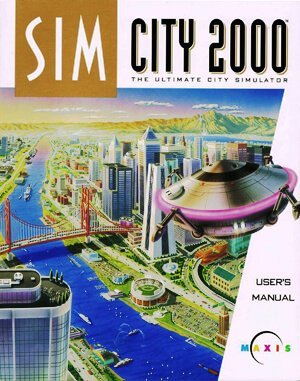
Several new systems were introduced compared to the original game. The player begins with the ability to customize the terrain, shaping features like hills and rivers before construction. The visual perspective changed to an isometric view, providing more detail. Civic management expanded to include a wider array of services such as schools, hospitals, and prisons, while new structures like airports and stadiums could influence land value and commerce. Transportation networks became more complex, requiring roads, railways, and subways to manage traffic congestion.
Player decisions are informed by feedback from multiple in-game newspapers, which report on issues like crime and pollution. The city does not exist in isolation; it can engage in trade with neighboring cities on a regional map, sharing resources like water or electricity. Random or player-triggered disasters, including earthquakes and alien invasions, test the resilience of the city's infrastructure. Advanced urban development is represented by the eventual availability of massive, self-contained arcologies.
Various adaptations of the game were released. Some versions, like the Network Edition, allowed multiple players to manage sections of one city simultaneously. Console ports for systems such as the PlayStation adapted the interface for controller use and sometimes altered navigation, while portable versions streamlined features for smaller screens.