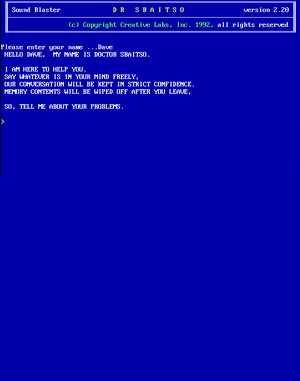
Eliza Overview
Eliza is a DOS program from 1966 that simulates a typed conversation with a Rogerian psychotherapist. Its method involves asking the user questions, often by rephrasing or prompting elaboration on the user's own previous statements. This created a dialogue where the computer seemed to be conducting the session.
The program's ability to sometimes pass the Turing test, deceiving users into briefly believing they were interacting with a human, spurred early popular discussion about artificial intelligence. Its approach to natural language interaction is noted as an influence on the development of later text adventure game interfaces.
In contrast to interactive fiction where the player questions a character, here the dynamic is reversed. The program elicits personal stories from the user by probing with questions, meaning the narrative content is generated entirely from the human participant's responses.